
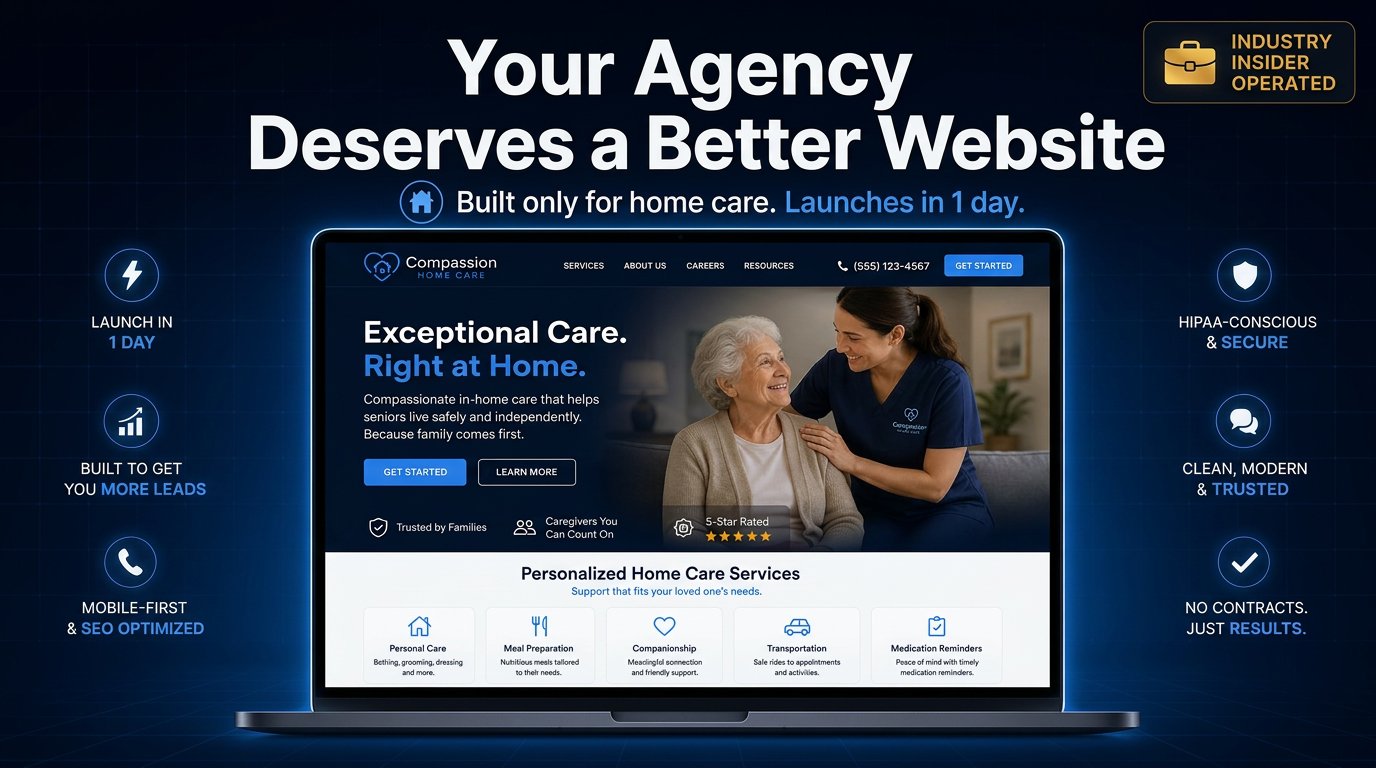
When families look for home care services, they usually start in one place: Google. If your agency isn't appearing on the first page, you’re missing out on the chance to help those who need it most. SEO (Search Engine Optimization) isn't just about keywords; it's about the technical health of your site.
Here is a breakdown of the essential technical elements that will help your home care website rank higher and earn more trust.
1. Next-Gen Image Optimization
What it is: This involves compressing images and using modern file formats like WebP instead of older, heavier formats like JPEG or PNG. Why it matters: Home care sites often feature high-quality photos of caregivers and seniors. If these files are too large, your site will crawl. Fast-loading sites reduce "bounce rates" (people leaving immediately) and are heavily favored by Google's ranking algorithm. How to check: Run your URL through Google PageSpeed Insights. It will specifically flag "Serve images in next-gen formats" if you need improvement.
2. Automated Sitemap.xml
What it is: A dynamic file that acts as a "map" for search engines, automatically "pinging" Google and Bing whenever you add a new service or blog post. Why it matters: You don't want to wait weeks for Google to realize you’ve added a new specialized care service. A sitemap ensures your new content shows up in search results days or even weeks faster. How to check: Go to your browser's address bar and type your domain followed by /sitemap.xml (e.g., youragency.com/sitemap.xml).
3. Local Business JSON-LD Schema
What it is: Advanced "hidden" code that tells AI crawlers exactly where your service area is and pulls in your reviews. Why it matters: This is the secret sauce for appearing in the "Map Pack"—those top three local results on Google Maps. It also generates "Rich Snippets," like those gold star ratings that make your link look more authoritative than the competition. How to check: Use the Google Schema Markup Validator to see if your site is communicating clearly with search engines.
4. Canonical Tag Protection
What it is: Digital "master copy" tags applied to every page to tell Google which version of a page is the original. Why it matters: Sometimes websites generate multiple URLs for the same page. Without canonical tags, Google might penalize you for "duplicate content." These tags protect your SEO "juice" by focusing it all on one primary page. How to check: Right-click on your homepage, select "View Page Source," and search (Ctrl+F) for rel="canonical".
5. Open Graph (OG) Meta Data
What it is: Specific tags that control how your website looks when shared on social media platforms like Facebook or LinkedIn. Why it matters: When a family member shares your link with a sibling to discuss care options, you don't want a broken image or a random string of text to appear. OG tags ensure a professional image and a clear description show up, increasing trust. How to check: Enter your link at OpenGraph.xyz to see exactly how your site previews across different platforms.
6. HTTPS Security
What it is: An SSL certificate that encrypts the data moving between your visitor's computer and your server. Why it matters: In home care, privacy is paramount. Google marks sites without HTTPS as "Not Secure," which will scare away families before they even read your first paragraph. Plus, secure sites get a slight ranking boost. How to check: Look for the padlock icon next to your URL in the browser bar. If it says "Not Secure," this should be your #1 priority.
7. Robots.txt Optimization
What it is: A specialized instruction file for search engine "spiders" that tells them which parts of your site to crawl and which to ignore. Why it matters: Google has a "crawl budget"—it only spends so much time on your site. By directing spiders to your most important pages first (like your service pages), you ensure your best content is indexed and ranked. How to check: Type your domain followed by /robots.txt into your browser. You should see a simple text file with instructions for "User-agent: *".
Is your website working as hard as your caregivers? By checking these seven boxes, you ensure that when a family in your community searches for help, your agency is the one they find first.